
Understanding career movement for Indigenous and racialized employees in the BC Public Service
May 28, 2026

The research
Past research has shown that Indigenous and racialized communities are underrepresented in the BC Public Service, especially at management and executive levels.
This report examines career movement for Indigenous and racialized employees in the BC Public Service over three reporting periods (2020, 2022 and 2024) to understand how representation changed over time.
Using data from two employee surveys (the Work Environment Survey and the New Job Survey), the research team looked at full-time and temporary roles (also known as auxiliary) and considered:
- Employees joining the BC Public Service
- Promotions across the organization
- Employees leaving the BC Public Service
By looking at career movement, the BC Public Service Agency (PSA) can better understand some of the factors impacting racial equity and diversity of employees in the BC Public Service over time.
This project aligns with the anti-racism research priority focused on racial equity within the BC Public Service. It builds upon research from 2024 and 2025, which highlighted the underrepresentation of Indigenous and racialized people in the BC Public Service.

The findings
For this research, the team analyzed data for employees who voluntarily shared their identify information to determine the percentage of those who identified as Indigenous or racialized for each reporting period. This approach provides more accurate information about changes in representation than including employees who chose not to share their identity in the research.
Previous research has shown that Indigenous and racialized employees are underrepresented in the BC Public Service due to systemic barriers within the organization. This analysis showed how representation has shifted over time across hires, promotions and departures, revealing trends for Indigenous and racialized employees.
While this research highlights trends in career movement across the organization, it does not explain what’s causing them. This research also does not confirm progress towards a more equitable workforce as these barriers still exist even when representation appears to increase.
Indigenous employees
For Indigenous employees, the research team found:
- A decrease in the percentage of employees hired from outside the organization (from 5.8 percent to 4.7 percent). Conversions from temporary to permanent positions showed no significant change
- An increase in the percentage of employees promoted through a competitive hiring process to a role in another ministry (3.4 percent to 4.8 percent), though there was no significant change for those promoted within their current ministry
- The percentage of Indigenous employees leaving the organization remained relatively consistent across the reporting periods (6.4 percent in 2020, 5.9 percent in 2022 and 5.8 percent in 2024)
These findings show that systemic barriers continue to exist for Indigenous people joining or becoming permanent employees in the BC Public Service. Further research is needed to understand these patterns, including how hiring processes, cultural safety and other systemic factors are affecting equitable access to employment for Indigenous communities.
Indigenous employees hired from outside the BC Public Service from 2020 to 2024
Indigenous employees promoted to a role in another ministry from 2020 to 2024
Indigenous employees who left the BC Public Service from 2020 to 2024
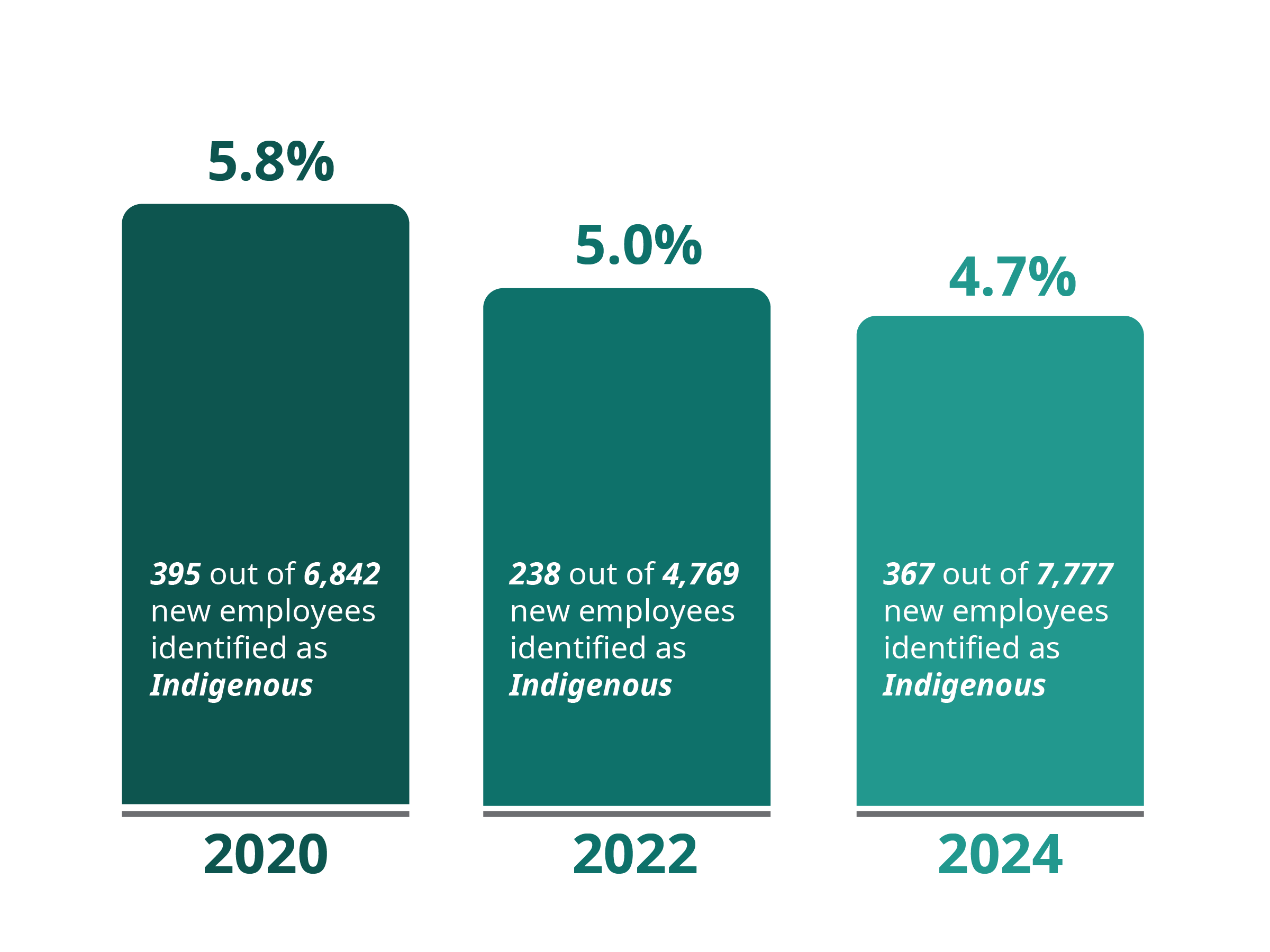
This analysis uses data from newly-hired employees who voluntarily shared their identity information.
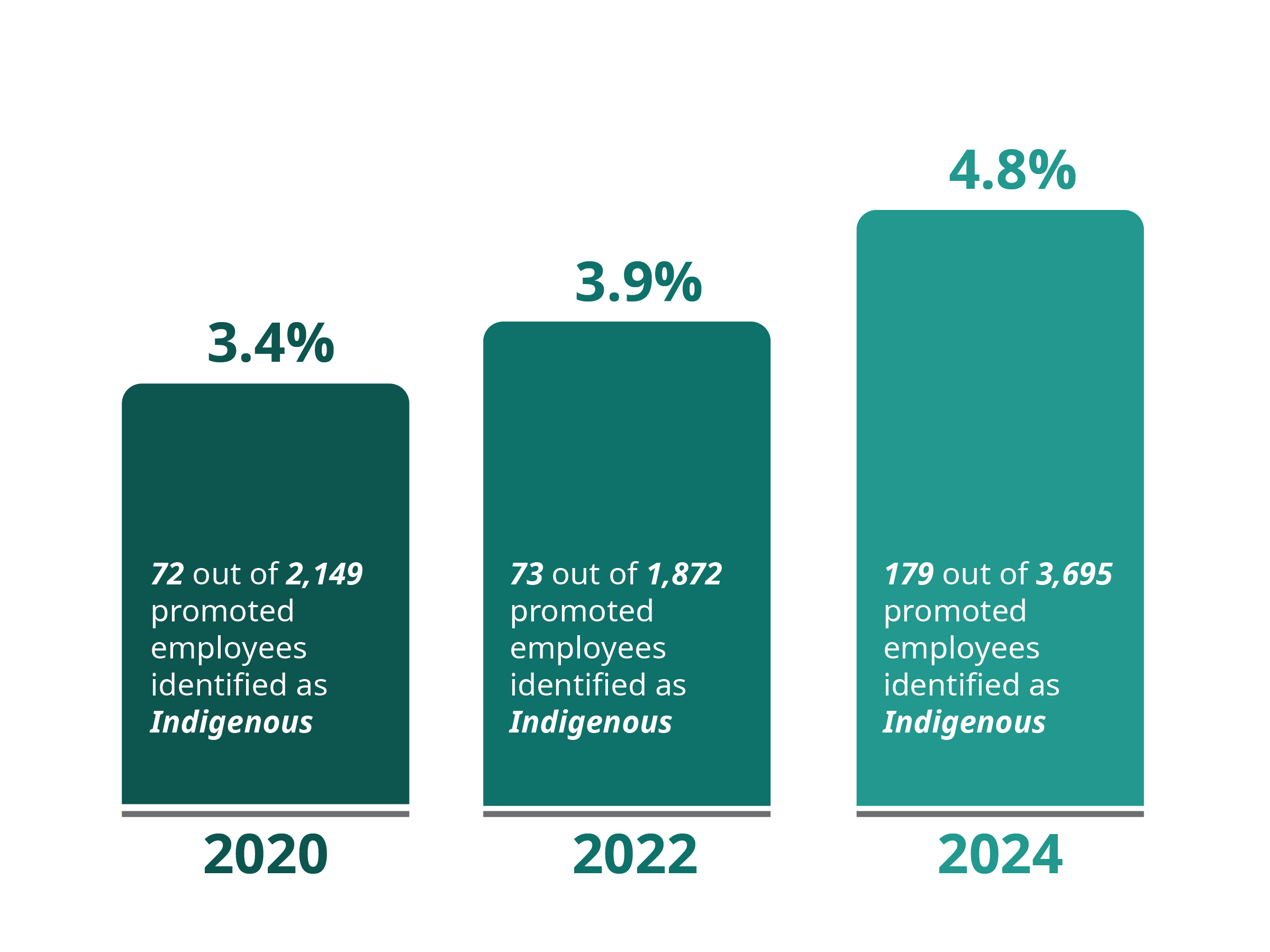
This analysis uses identity information voluntarily shared by employees who earned a promotion to a new role in another ministry through a competitive hiring process.
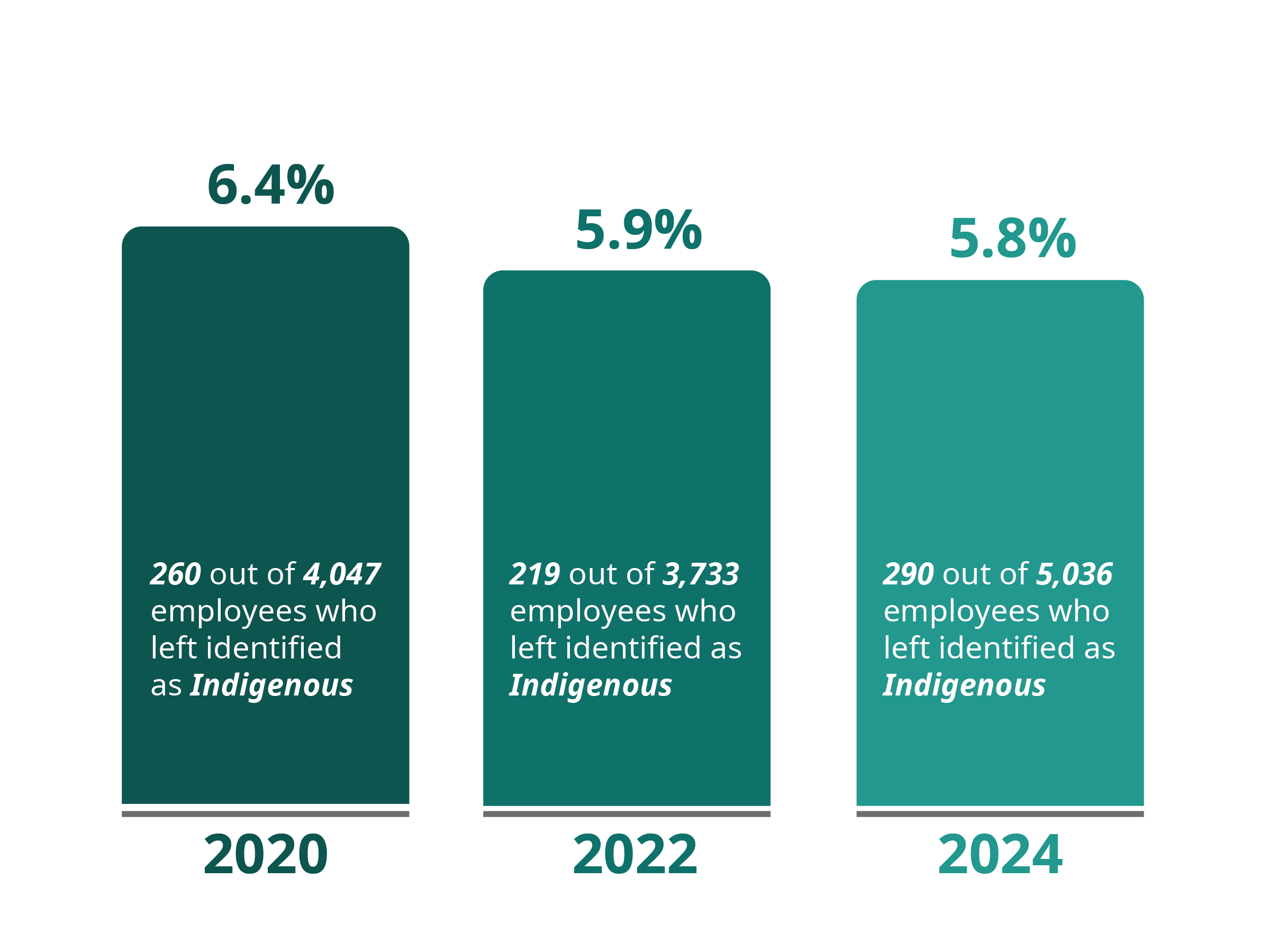
This analysis uses identity information voluntarily shared by employees who left the BC Public Service.
Racialized employees
For racialized employees, the research team found:
- An increase in both the percentage of external hires (26.8 percent to 36.2 percent) and those converting from temporary to permanent positions (24 percent to 30.1 percent)
- An increase in the percentage of employees across the organization who earned promotions through a competitive hiring process, both within the same ministry (18.8 percent to 22.5 percent) and moving to another ministry (23.8 percent to 28 percent)
- An increase in the percentage of employees leaving the organization (20.4 percent to 22.7 percent)
While these findings show increases in hiring and promotions across the reporting periods, further research is needed to understand how workplace experiences, career development opportunities and systemic conditions are affecting retention and advancement for racialized employees.
Racialized employees hired from outside the BC Public Service from 2020 to 2024
Racialized employees who changed from temporary to permanent positions from 2020 to 2024
Racialized employees who left the BC Public Service from 2020 to 2024
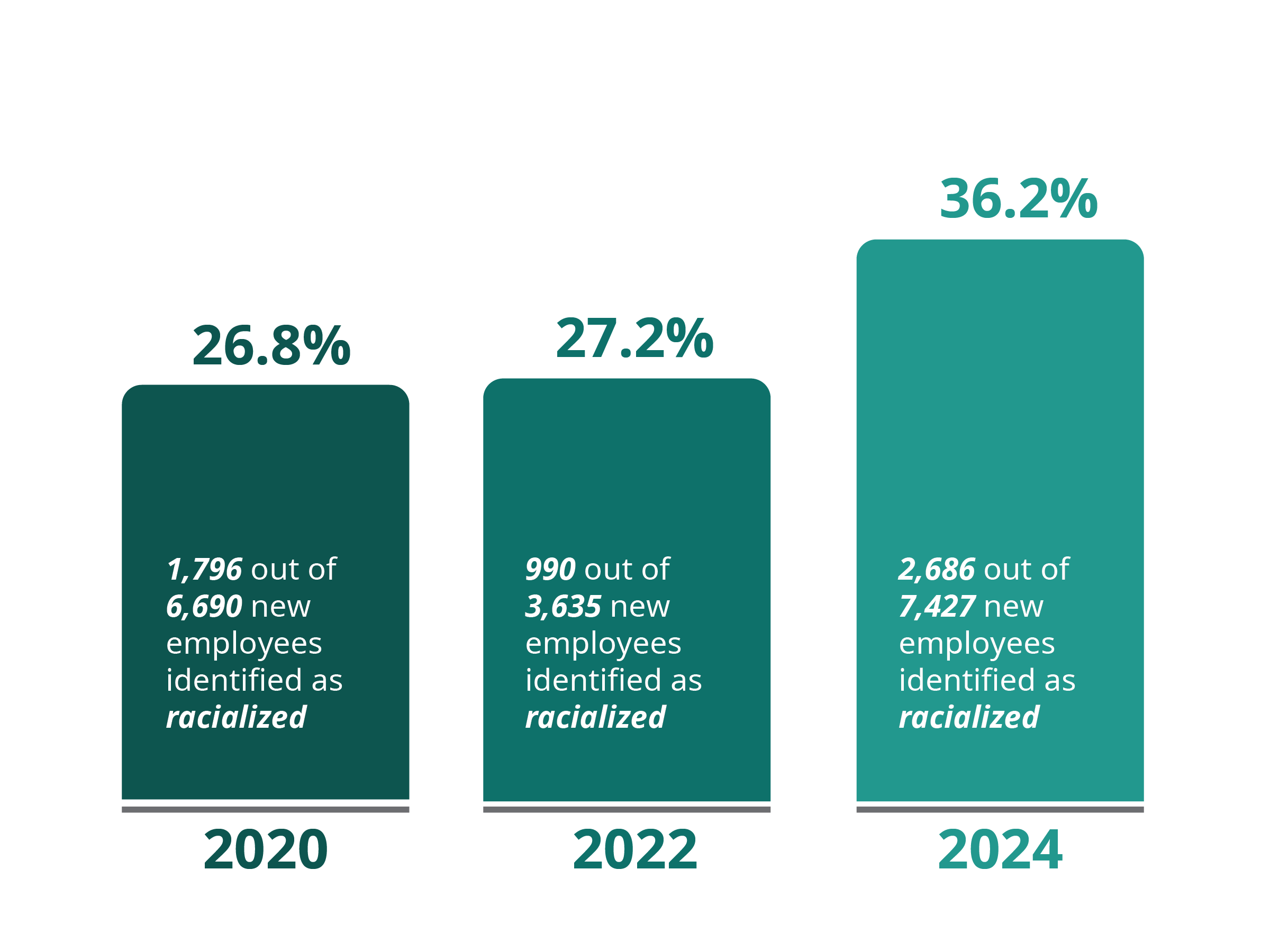
This analysis uses data from newly-hired employees who voluntarily shared their identity information.
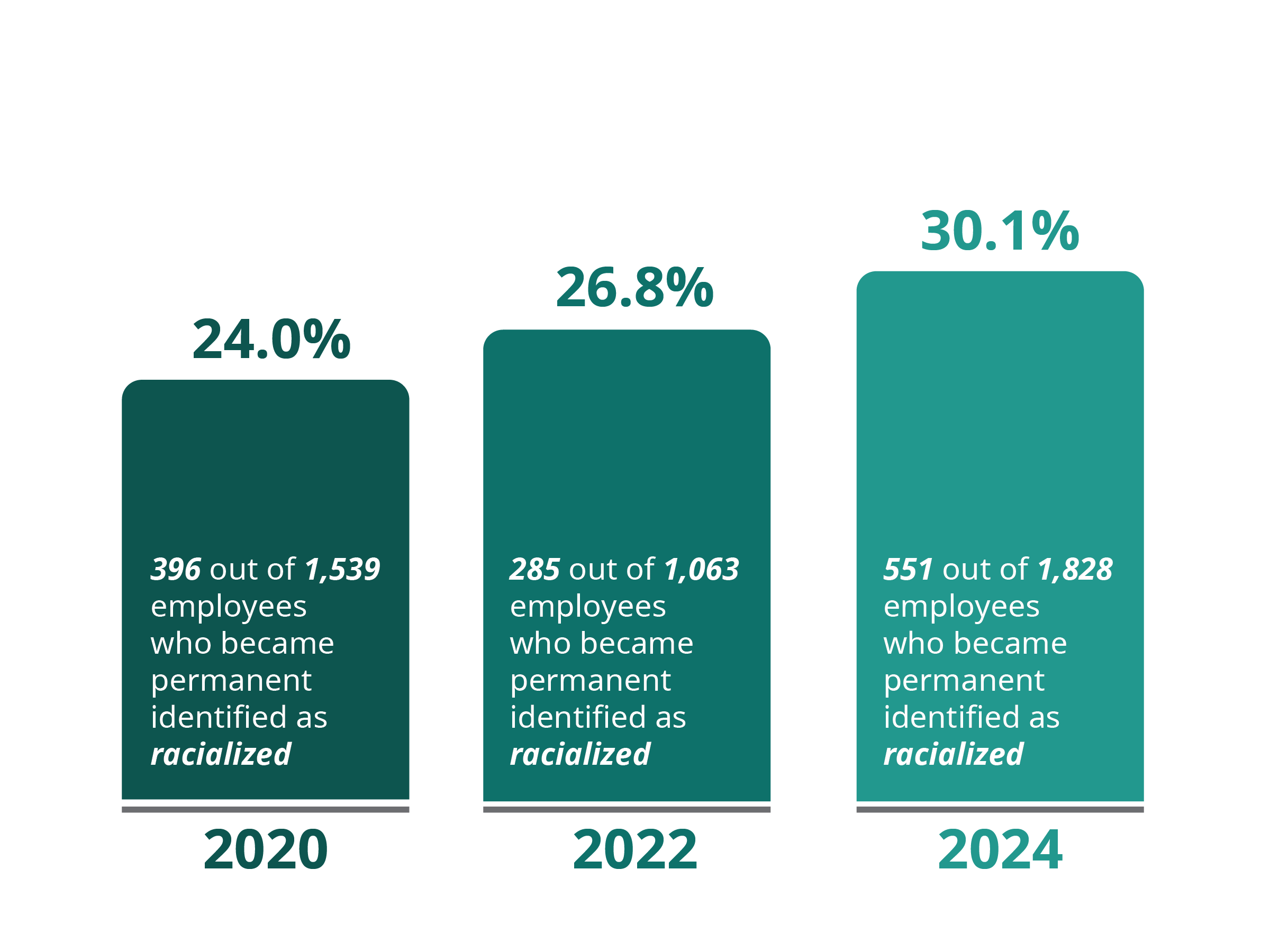
This analysis uses identity information voluntarily shared by employees who moved from a temporary (auxiliary) to a permanent role in the BC Public Service.
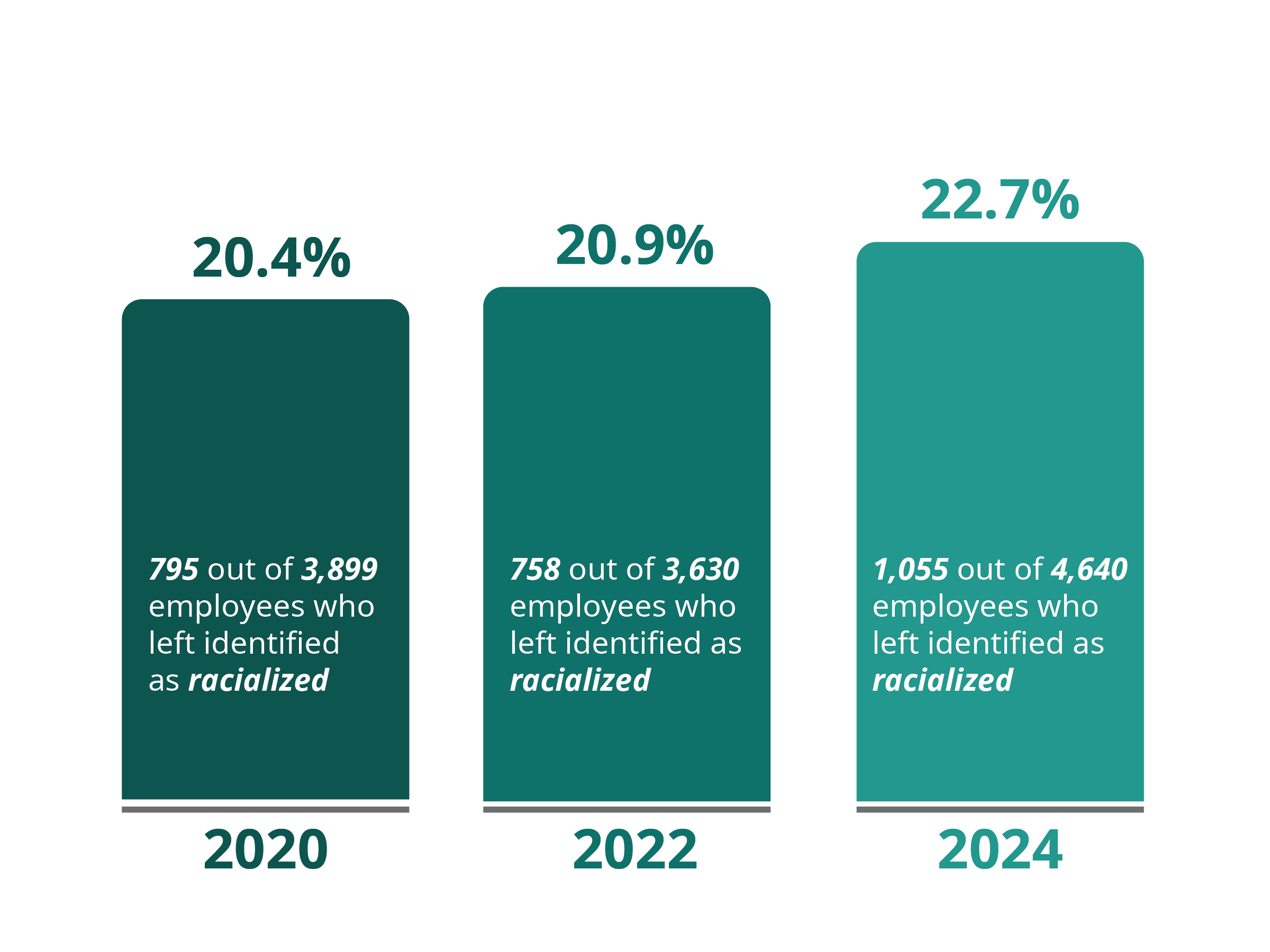
This analysis uses identity information voluntarily shared by employees who left the BC Public Service.
Data limitations
The analysis considers employees who shared their identity information and looks at certain roles or types of movement. It does not include employees who chose not to provide their identity information or those who moved into a temporary assignment or a lateral position in the organization.
The research does not offer a disaggregated or distinctions-based analysis as the data used by the team only groups employees as Indigenous or racialized. This makes it challenging to understand how demographic groups are being impacted by systemic barriers within the BC Public Service.

Next steps
To address these findings, the PSA will focus on continuing research and strengthening the systems that influence workplace experiences in the BC Public Service. Upcoming work includes:
- Continuing research, including qualitative work and taking a more detailed, distinctions based approach to better understand where Indigenous and racialized employees experience barriers
- Reviewing career development and retention practices and building simple tools to help track where changes may be needed
- Supporting ongoing work across government to apply equity focused practices more consistently
Future research will prioritize using race-based and distinctions-based data to analyze how specific employee groups are impacted by systemic barriers within the organization. This includes engagement to provide a more detailed look at Indigenous and racialized employees’ experiences of working in government.
Learn more
Read the research report to learn more about the project and its findings.
Related links